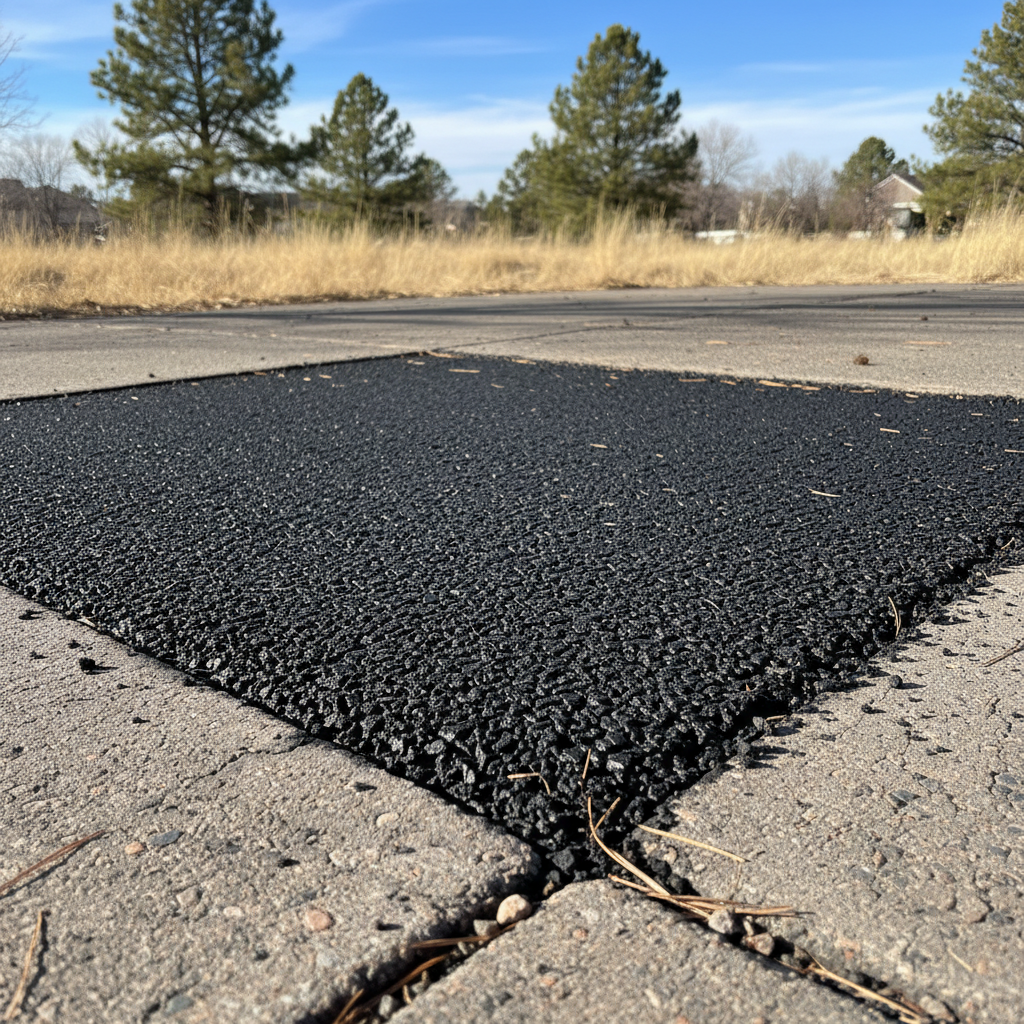
So, your asphalt driveway has a new battle scar. A pothole is here, and a crack is there. This happens, especially with our crazy Colorado weather. You might be looking at it and wondering if you can just put some stuff down from the hardware store. You might also wonder if you need to call in the cavalry. As someone who has been doing this for a while with Done Right Asphalt, our team has seen it all. We can tell you there is a time and a place for both DIY and professional asphalt patching.
Before You Patch: Know Your Damage as well as Your Limits
Our first step is to assess the situation. Not all damage is created equal. You can think of it like a cut. A small scrape is different from a deep gash that needs stitches.
When You Can Probably DIY (Small Stuff)
- Small Cracks: If you have hairline cracks, or even those up to about a quarter-inch wide, you can usually handle these yourself. These are often surface-level issues.
- Shallow Potholes: A pothole that is just an inch or two deep and not too wide is a good candidate for cold patch asphalt. Cold patch asphalt is designed for quick as well as easy repairs.
- Surface Scuffs: Minor surface wear or fading can often be addressed with cleaning as well as a fresh sealcoat. This is more maintenance than patching.
When to Call a Pro (Bigger Problems)
If you see any of these issues in Parker, put down the cold patch and pick up the phone. You will save yourself headaches as well as potentially more money in the long run:
- Deep, Wide, or Spreading Cracks: Cracks wider than a quarter-inch, especially those that keep coming back or are webbing out like alligator skin, usually mean there is a deeper issue. Water is probably getting into your base layer. This is a big deal here in Parker with our expansive clay soils as well as our freeze-thaw cycles.
- Large or Deep Potholes: Anything more than a couple of inches deep or wide needs professional equipment as well as expertise to really fix it right. Done Right Asphalt will need to remove the damaged area. We will also prep the base. Our team will use hot mix asphalt for a durable repair.
- Drainage Issues or Pooling Water: If water is consistently sitting on your driveway in Parker, that is a sign of improper grading or underlying problems. A patch will not fix that. You need someone who can address the root cause.
- Crumbling Edges or Uneven Surfaces: These issues point to structural problems or base erosion that a simple patch cannot fix.
- Multiple Issues or Widespread Damage: If your driveway looks like a patchwork quilt, it is probably time for a more complete solution than just patching.
During the Patch: DIY Steps as well as Pro Considerations
DIY Cold Patching
Alright, so you have decided it is a DIY job for your asphalt driveway in Parker. Here is how you tackle it:
- Clean it Out: Get rid of all loose debris, dirt, and standing water from the pothole or crack. A stiff brush, a broom, or even a leaf blower works well. You want a clean as well as a dry surface for the patch to stick.
- Square it Up (Optional but Recommended): For potholes, some people recommend cutting the edges of the hole to make it a neat, square shape. This helps the patch adhere better as well as last longer.
- Fill it In: If the pothole is deeper than two inches, fill the bottom with gravel or crushed stone until it is about two inches deep. Then, pour your cold patch asphalt directly into the hole. You should slightly overfill it.
- Compact It: This step is important. Use a hand tamper, a heavy piece of wood, or even drive over it slowly with your car. You want to compact it thoroughly to remove air pockets as well as make sure it is a stable, long-lasting repair. Add more cold patch and compact again if needed until it is flush with the surrounding surface.
- Seal the Edges: Apply a sealant around the edges of your patch. This helps prevent water from getting in and undermining your repair.
Cold patch is great because you do not need to heat it. You can even use it in colder weather. It is a quick fix for asphalt problems in Parker.
What a Pro Does (Hot Mix Patching)
When Done Right Asphalt comes out for a bigger patching job in Parker, we are typically using hot mix asphalt. This is not something you can just buy in a bag and apply. It is heated to around 300-350°F at a plant and needs to be applied while hot. Our team will:
- Cut and Remove: We will cut out the damaged section of asphalt. We often square it off. Our team will remove all the old material.
- Prep the Base: This is where our Parker expertise comes in. We will make sure the sub-base is stable. This is especially important with our expansive clay soils in Parker. This might involve adding and compacting new aggregate.
- Apply Tack Coat: A bonding agent is often applied to the edges. This helps the new asphalt stick to the old asphalt.
- Lay Hot Mix: We will lay down the hot asphalt mix in layers. Our team compacts each one with specialized rollers to achieve the right density. This creates a strong as well as a smooth repair.
After the Patch: Curing as well as Care
For DIY Cold Patches
Cold mix asphalt patches typically set and are ready for light use within 24 hours. However, it can take a few weeks to fully harden. The chemicals in the cold patch need time to cure. This can be affected by weather in Parker. Try to avoid heavy traffic on it for a few days if you can.
For Professional Hot Mix Patches
Hot mix asphalt needs to cool and set. You usually need to wait at least 24-72 hours before driving on it. The asphalt will continue to cure over several months, sometimes up to a full year. The oils oxidize and it hardens completely. During this time, especially in our hot Parker summers, the asphalt can still be a bit soft. Avoid parking in the exact same spot for long periods. You should also avoid turning your wheels while stationary to prevent indentations.
General Post-Patch Care
- Keep it Clean: Regularly sweep away dirt, leaves, and debris. This prevents moisture from getting trapped and breaking down the asphalt.
- Clean Spills: Oil and gas spills can break down asphalt. You should clean them up right away.
- Sealcoat (Later): Once your patch is fully cured, consider sealcoating your entire driveway. Give it at least 30 days for hot mix. It might take longer for cold patch to be safe. This protects it from UV rays as well as water. It also helps extend its life. Here in Colorado, with our intense sun as well as temperature swings, sealcoating every 2-3 years is a smart move for your asphalt.
Patching your driveway is not rocket science. Knowing when to DIY and when to call in a pro makes all the difference. For those bigger jobs, or if you are just not sure, that is what Done Right Asphalt is here for. We have the tools as well as the know-how to get your asphalt work Done Right in Parker.