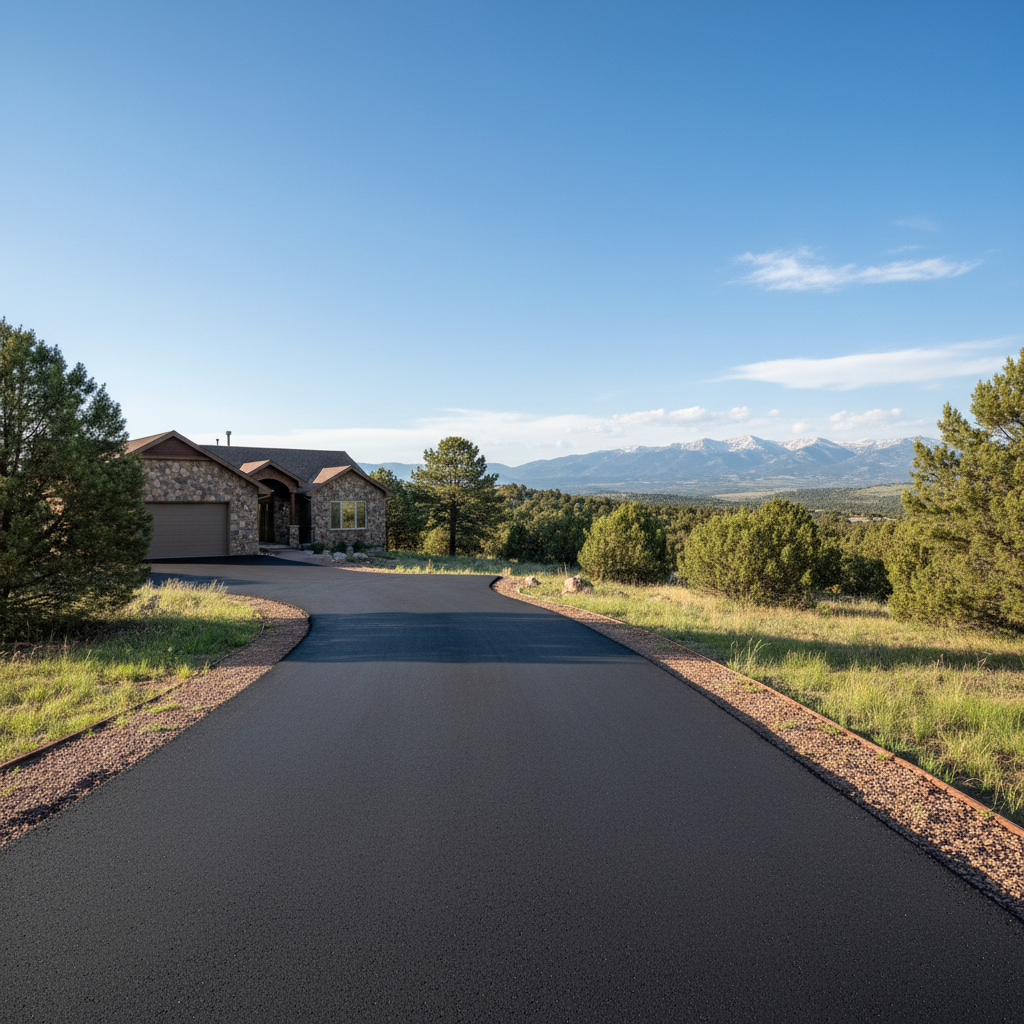
You just had a beautiful new asphalt driveway put in, or maybe you've had one for a while and you're wondering how to keep it looking good and lasting long. Around here in Parker, Colorado, our climate isn't exactly easy on pavement. We've got those brutal freeze-thaw cycles, scorching summer sun, and even hail sometimes. All that takes a toll, but with a little attention, you can significantly extend the life of your driveway.
Regular Maintenance: Your Driveway's Best Friend
Think of your driveway like your car; it needs regular check-ups to stay in top shape. It's not complicated, but it makes a huge difference.
- Keep it clean: Sounds simple, right? But dirt, gravel, and organic debris like leaves and pine needles can hold moisture against the asphalt. That moisture, especially when it freezes, can accelerate deterioration. Sweep it off regularly, and if you've got oil or gas spills, clean them up immediately. Those chemicals eat away at the binder in the asphalt.
- Sealcoating: This is probably the most important thing you can do. A good sealcoat acts like sunscreen and a raincoat for your driveway. It protects against UV rays, water penetration, and even some chemical spills. For new driveways, I usually recommend waiting about 6-12 months after installation to let the asphalt fully cure. After that, every 2-3 years is a good general guideline for residential driveways in Parker. If you've got a lot of sun exposure or heavy traffic, you might need it a bit more often.
- Edge care: The edges of your driveway are often the weakest points. If you've got grass or weeds growing right up to the edge, trim them back. Water can seep under there, and roots can cause cracking. Sometimes, just a little gravel shoulder can help support the edges and prevent them from crumbling.
Warning Signs: What to Look For
Your driveway will usually tell you when it's starting to have issues. You just need to know what to listen for, or in this case, what to look for.
- Cracks: Any crack, big or small, is a pathway for water. Small hairline cracks can often be filled with a good quality crack filler. If you see alligator cracking (a series of interconnected cracks resembling alligator skin), that's a sign of a deeper structural problem, usually due to a weak base or heavy loads.
- Potholes: These start as small depressions or cracks that eventually lose their base support and crumble away. They're not just ugly; they're dangerous and will get bigger if ignored.
- Fading or dullness: If your asphalt is looking gray instead of black, it means the top layer is oxidizing and losing its protective oils. This is a clear sign that it's time for a sealcoat.
- Depressions or standing water: If you see puddles forming after a rain, it means your driveway isn't draining properly. This can be due to settling, a poor original grade, or a failing base. Standing water will accelerate deterioration significantly.
- Raveling: This is when the aggregate (the small stones) starts to come loose from the surface. It often looks like the driveway is