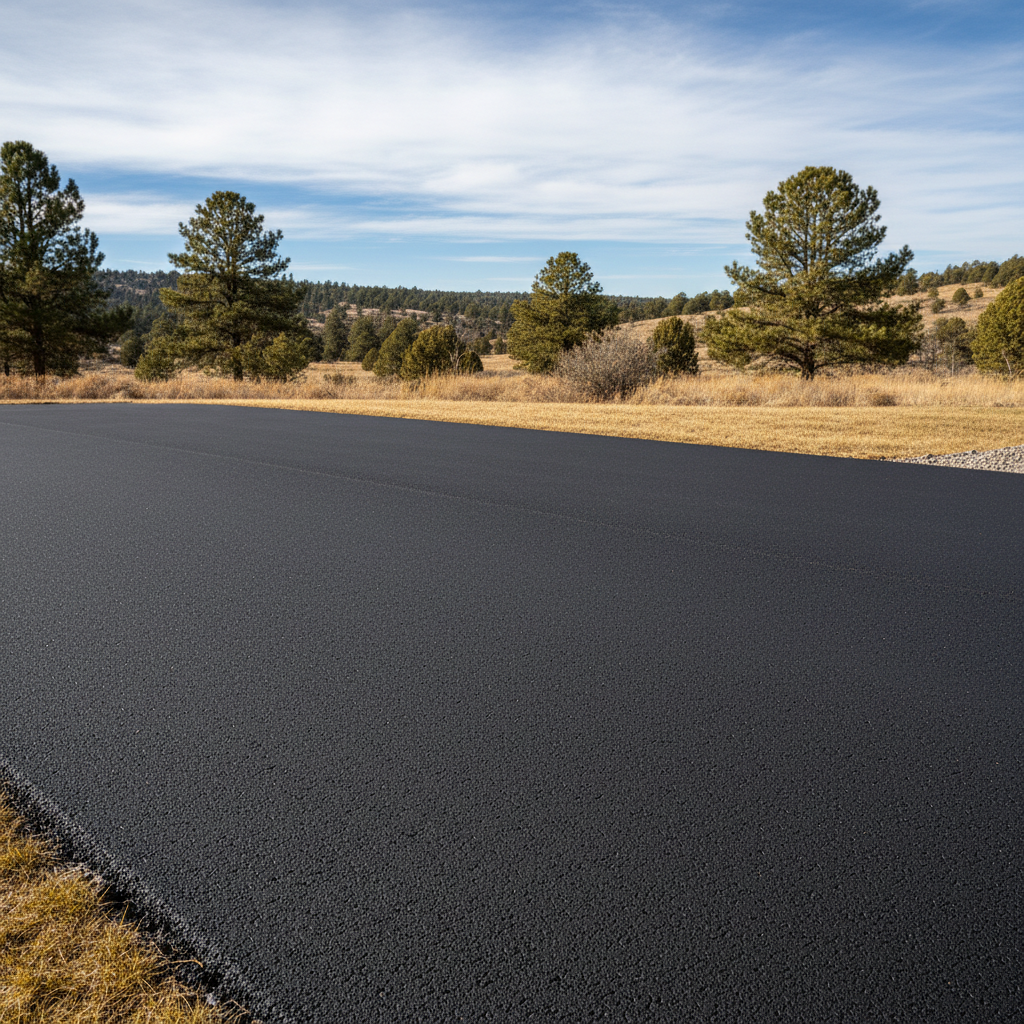
Alright, let's talk about commercial asphalt. Now, I know what some of you are thinking — "I'm a homeowner, why do I care about commercial asphalt?" But if you live in an HOA, a condo complex, or any planned community right here in Parker, you're actually dealing with commercial asphalt every single day. Those streets, parking lots, and access roads? That's commercial pavement, pure and simple. And keeping it in good shape is a big deal for your community's budget and, let's be honest, your property values. I get a lot of questions from HOA boards and residents, so let's hit the most common ones.
What's the real difference between residential and commercial asphalt?
Good question. On the surface, it's all asphalt, right? But the key differences are in the mix design and how the base gets prepped. Commercial asphalt, like what you'd find in a shopping center or an HOA street, is built to handle much heavier loads and way more traffic. It's usually applied thicker, uses a tougher aggregate blend, and needs a much stronger, more stable sub-base underneath. Think about it: your personal driveway might see a few cars a day. An HOA road in a place like Stonegate or The Timbers? It's getting hundreds of vehicles, delivery trucks, trash trucks, emergency services — you name it. That demands a tougher product. We're talking about pavement designed for longevity under constant stress, not just curb appeal.
How often should our HOA be sealcoating commercial asphalt?
This is a big one, and it's where a lot of communities try to cut corners, only to pay more later. For commercial asphalt here in Parker, I generally recommend sealcoating every 2-3 years. Now, that's assuming it was installed correctly and you're not seeing major issues. Our intense Colorado sun, those crazy freeze-thaw cycles we get, and even the de-icing agents used in winter really beat up asphalt. Sealcoat is like sunscreen for your pavement; it protects against UV rays, water getting in, and oxidation. Skipping it means your asphalt dries out, cracks form faster, and you're looking at more expensive repairs down the road. It's a preventative measure that saves serious money in the long run.
We're seeing cracks everywhere. What's the best way to fix them?
Cracks are inevitable with asphalt, especially with our expansive clay soils here in Parker that can shift and settle. The best way to fix them depends on the type and how bad they are. Small, hairline cracks can often be effectively filled with a hot-applied crack sealant. This keeps water out, which is crucial for preventing further damage from freeze-thaw. For larger, alligator cracking, you're usually looking at something more substantial, like an asphalt patch or even a full-depth repair if the base is compromised. Don't let cracks go unaddressed; water is asphalt's worst enemy. It gets under the surface, freezes, expands, and then you've got potholes and major deterioration. Catch them early!
Our parking lot has standing water after it rains. Is that a problem?
Absolutely, it's a problem. Standing water, or 'ponding,' is a clear sign of drainage issues or pavement failure. It can happen because of improper grading during the initial installation, settlement over time, or simply a worn-out surface that's lost its crown. Ponding water softens the asphalt, weakens the sub-base, and drastically speeds up deterioration. It's also a safety hazard, creating slick spots and potential for hydroplaning. We often use infrared patching to correct these low spots, heating and re-compacting the existing asphalt to restore proper drainage. Ignore it, and you'll get potholes and complete pavement failure in those areas, guaranteed.
How long does a new commercial asphalt installation typically last in Parker?
With proper installation, good materials, and consistent maintenance (like regular sealcoating and crack filling), a commercial asphalt surface in Parker can last 15-20 years, sometimes even longer. But that's the key: 'proper installation' and 'consistent maintenance.' If corners are cut on the base, or if maintenance is neglected, you'll be lucky to get 10-12 years before you're looking at major overlays or even full reconstruction. The upfront investment in a quality job and a solid maintenance plan really pays off over the lifespan of the pavement.
When's the best time of year to do asphalt work in Parker?
For most asphalt work – paving, sealcoating, major repairs – the sweet spot in Parker is generally from late spring through early fall. We need consistent warm temperatures, usually above 50°F, for the asphalt to cure properly and for sealcoat to stick and dry effectively. Trying to pave or sealcoat when it's too cold leads to poor compaction, cracking, and a much shorter lifespan for the product. Plus, you want to avoid our monsoon season in late summer for sealcoating, as rain can wash it away before it cures. So, think May through September for the best results.
Look, maintaining commercial asphalt isn't just about how it looks; it's about safety, property value, and smart budgeting for your community. If you've got more questions or need an assessment for your HOA's pavement, don't hesitate to reach out to us at Done Right Asphalt. We're here to help you keep things smooth.