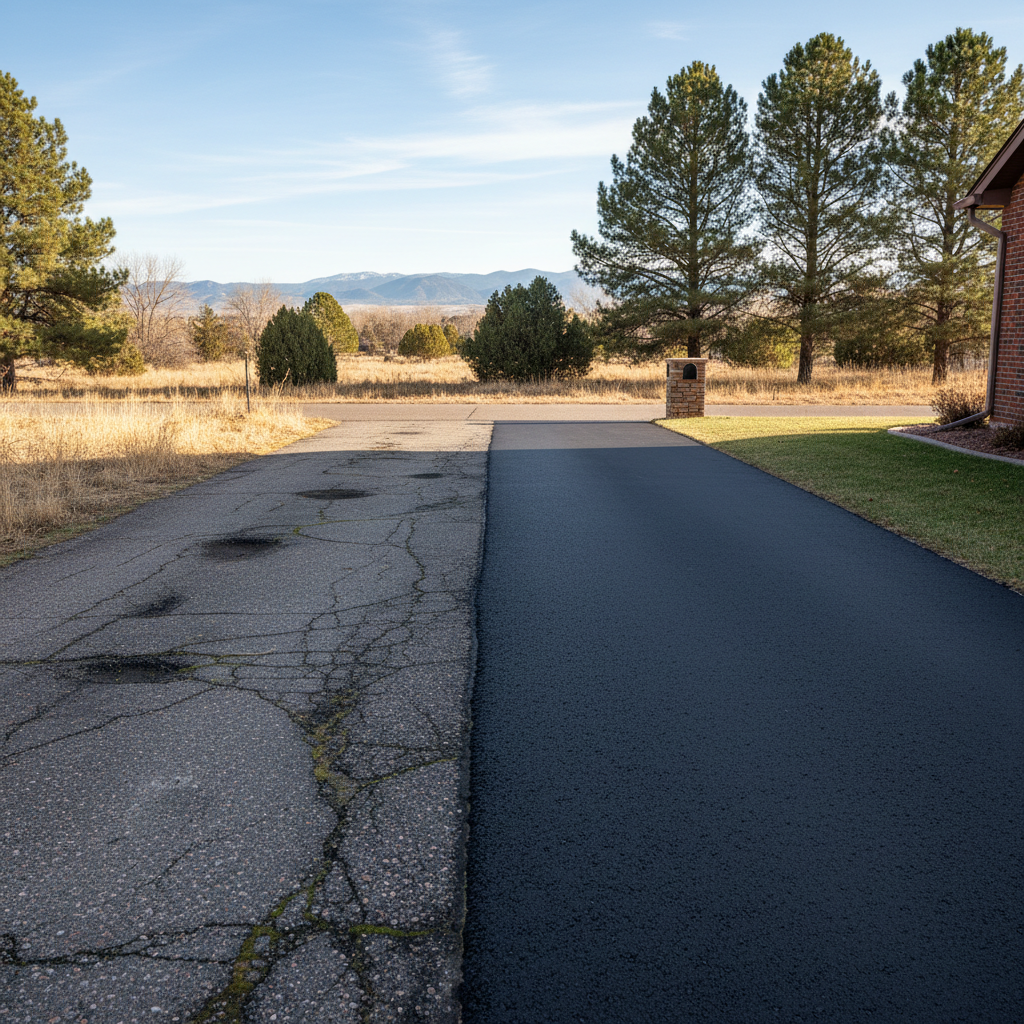
So, you're thinking about a new driveway, huh? Or maybe it's time to replace that cracked-up mess you've been living with. Most folks in Parker, CO, come down to two main choices: asphalt or concrete. Both get the job done, but they're definitely not the same. As someone who's been laying down pavement around here for years, I've seen the good, the bad, and the ugly of both. Let's talk about what you really need to know before you make that call.
Cost: Upfront vs. Long-Term
Let's get right to it: money. Generally speaking, asphalt is almost always cheaper upfront than concrete. You're usually looking at anywhere from 30% to 50% less for asphalt per square foot. That's a big chunk of change, especially for a bigger driveway. This is because the materials themselves are often less expensive, and the installation process can be a bit quicker.
Now, concrete, on the other hand, costs more to put in. The materials are pricier, and it's a more labor-intensive job to pour and finish correctly. But here's where the long-term thinking comes in. While asphalt might be cheaper initially, its maintenance schedule is a bit more demanding, which can add up over the years. We'll get to that.
Durability & Our Colorado Climate
This is where things get interesting, especially for us here in Parker. Our freeze-thaw cycles are brutal on pavement. One day it's 50 degrees and sunny, the next it's 15 degrees and snowing. That expansion and contraction is a killer.
Asphalt: It's flexible. That's its superpower. When the ground underneath shifts a little (and it does, especially with our expansive clay soils around areas like Canterberry Crossing), asphalt can flex with it. This makes it less prone to cracking from ground movement. It also handles de-icing salts pretty well, which is good because we use a lot of those around here. However, asphalt does soften in extreme heat, and it can crack or rut over time if not properly maintained. It's also more susceptible to damage from heavy loads, like RVs parked in the same spot for months.
Concrete: Concrete is tough, no doubt about it. It's rigid and can bear heavy loads without much trouble. A well-installed concrete driveway can easily last 30+ years. The problem? That rigidity. When our ground heaves and settles, concrete doesn't flex; it cracks. And once it cracks, it's a real pain to fix seamlessly. Our freeze-thaw cycles can also cause spalling (flaking of the surface) if the concrete isn't properly sealed or if too much de-icing salt is used. It's also more prone to staining from oil or other fluids.
Maintenance: What You're Signing Up For
Every driveway needs some love, but the kind of love they need is different.
- Asphalt: You're going to need to sealcoat your asphalt driveway every 2-5 years. This isn't just for looks; it protects the surface from UV rays, water penetration, and oil spills. It keeps it flexible and extends its life. You'll also want to patch any small cracks or potholes as they appear. It's a bit more hands-on, but these tasks are generally cheaper and easier to do than major concrete repairs.
- Concrete: Concrete is often seen as