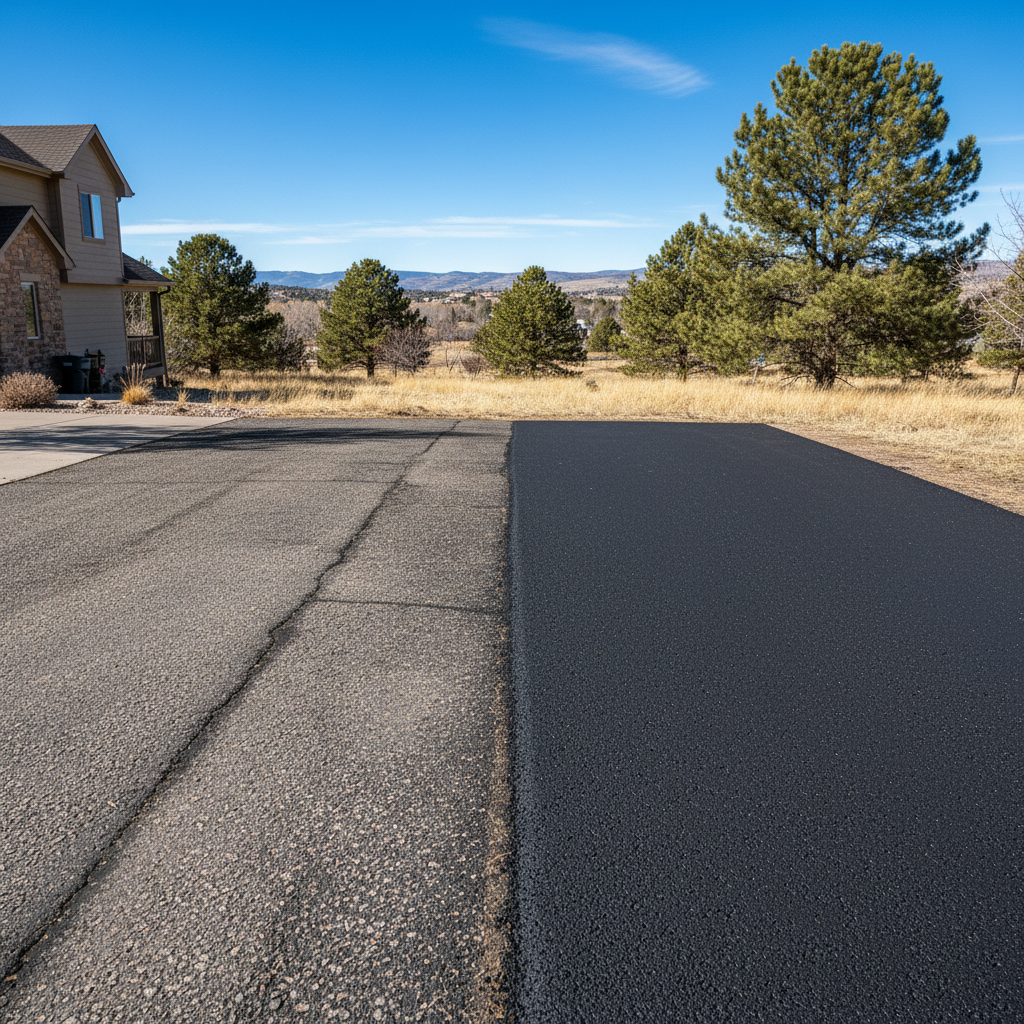
Your driveway's seen better days, right? Maybe you've got some spiderweb cracks, a pothole that's getting bigger, or just general wear and tear. When you're looking at asphalt repair, it usually comes down to two main approaches: patching up the bad spots or going for a full-on replacement of the affected area. It's not always an easy call, and I see folks in Parker wrestle with this all the time.
Patching: The Quick Fix
Let's talk about patching first. This is where we cut out the damaged section of your asphalt, dig down, prepare the base, and then lay new asphalt in that specific area. You'll hear terms like 'full-depth patching' or 'cut-and-patch' for this kind of work. It's a targeted repair, and it's great for isolated problems.
- Cost: Generally, patching is less expensive upfront than replacing a whole section. You're paying for less material and less labor.
- Durability: A well-done patch, especially a full-depth one, can last a good long time. We're talking years, not months. The key is making sure the edges are clean, the base is solid, and the new asphalt is properly compacted. If the underlying cause of the damage (like a bad drainage issue or a failing base) isn't addressed, though, that patch might not hold up as long as you'd hope.
- Maintenance: Patches don't really require special maintenance beyond your regular sealcoating schedule, which you should be doing every few years anyway to protect your whole driveway.
- Appearance: This is where patching can be a bit of a mixed bag. You'll almost always see the outline of the patch. The new asphalt will be darker than your existing driveway, and while it'll fade to match over time, it'll still look like a repair. If you're really particular about a uniform look, this might bother you.
When is patching the right call? If you've got a few isolated potholes, some alligator cracking in a small area, or damage from a utility repair, patching is often the most cost-effective and practical solution. It's like putting a new tire on your car instead of buying a whole new car just because one tire blew out.
Replacement: The Fresh Start
Now, let's look at replacing a section of your driveway. This involves removing a larger, continuous area of asphalt, often from one expansion joint to another, or even the entire driveway. We're talking about a more significant overhaul here.
- Cost: This is going to be more expensive than patching, no two ways about it. You're paying for more material removal, more new asphalt, and more labor.
- Durability: When you replace a whole section, you're essentially getting a brand new piece of driveway. If the base is properly prepared, this new section should last as long as a brand new driveway, which is typically 15-20 years with proper maintenance. It's a reset button for that area.
- Maintenance: Just like a new driveway, it'll need sealcoating within the first year or two, and then every 2-4 years after that.
- Appearance: This is where replacement shines. You get a uniform, fresh surface. No visible patches, no mismatched colors. It looks like a brand new driveway, because, well, it is.
So, when should you consider replacement? If your driveway has widespread cracking, multiple potholes, significant heaving or sinking, or if the asphalt is just generally old and brittle across a large area, replacement is probably the better long-term investment. I've seen plenty of driveways in neighborhoods like Stonegate where the original asphalt is just giving up the ghost, and trying to patch every little problem becomes a never-ending battle.
My Recommendation for Parker Homeowners
Here's the deal: Colorado's freeze-thaw cycles are brutal on asphalt. Water gets into tiny cracks, freezes, expands, and then thaws, leaving bigger cracks and eventually potholes. This process is relentless. Because of this, I generally lean towards a more robust solution when the damage is extensive.
If you have just a few isolated issues, say a couple of potholes or a small section of alligator cracking, patching is a perfectly fine option. It'll extend the life of your driveway without breaking the bank. Just make sure the contractor (like us at Done Right Asphalt) is doing a proper full-depth patch, addressing the base if needed, and not just throwing a thin layer of asphalt over the problem.
However, if your driveway looks like a patchwork quilt already, or if you're seeing widespread cracking and deterioration across a third or more of its surface, you're probably better off replacing that entire section. Trying to patch every problem area will end up costing you more in the long run, and you'll still have a driveway that looks piecemeal. A full replacement gives you a clean slate and peace of mind for years to come, especially with our intense sun and temperature swings.
Ultimately, it comes down to the extent of the damage and your budget. But remember, a good repair is an investment. Don't just go for the cheapest option; go for the one that makes sense for the long haul. Give us a call, and we can come out, take a look, and give you an honest assessment of what your driveway really needs.