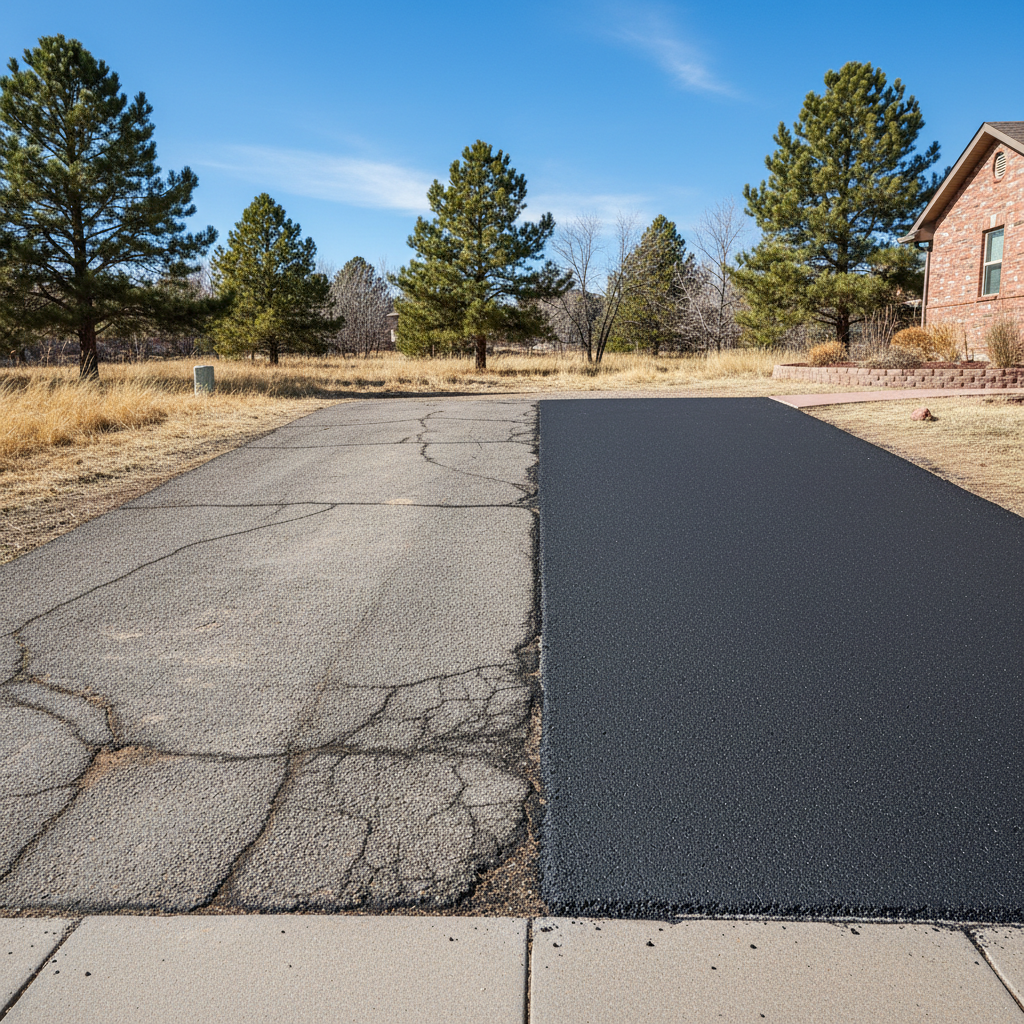
Your asphalt driveway takes a beating, especially here in Parker. Between our hot summers, freezing winters, and the occasional hailstorm, it's not long before you start seeing cracks or potholes. When that happens, you've got a couple of main options for repair, and picking the right one makes a big difference for your wallet and your driveway's lifespan. We're going to talk about crack filling/sealing versus infrared asphalt repair.
Crack Filling & Sealing: Your First Line of Defense
Think of crack filling like patching a small cut before it gets infected. It's a preventative measure, and it's super important. When you see those thin, spiderweb cracks or even longer, isolated ones, that's water's invitation to get under your asphalt. Once water gets in, freezes, and expands, those small cracks become big problems – potholes, heaving, and eventually, total failure.
Cost: This is generally the most affordable repair option. We're talking dollars per lineal foot, not per square foot. It's a small investment that prevents much larger ones down the road.
Durability: A properly filled crack, using high-quality hot-pour sealant, can last several years. It's flexible, so it moves with your asphalt as temperatures change. It won't last forever, but it buys you a lot of time.
Maintenance: Pretty low. Once it's done, you just keep an eye on it. You might need to re-seal cracks every few years, depending on how active they are and how much traffic your driveway sees.
Appearance: It's a repair, so it's not invisible. You'll see the black lines of sealant. But it's a lot better than a gaping crack or a pothole.
When to use it: For hairline cracks, alligator cracking that hasn't started to crumble, and isolated linear cracks. If your driveway is still mostly solid but has these surface-level issues, crack filling is what you need.
Infrared Asphalt Repair: The Seamless Solution for Localized Damage
Now, what if you've got a bigger problem? Maybe a pothole that's formed, or an area of alligator cracking that's really started to break up. That's where infrared asphalt repair comes in. This isn't just dumping cold patch into a hole; it's a more advanced technique that aims for a seamless repair.
How it works: We use an infrared heater to warm up the damaged asphalt and the surrounding area to a very high temperature. This softens the existing pavement, allowing us to rake it, add new hot asphalt mix, and then compact it. The key is that it blends the new material with the old, creating a thermal bond that's much stronger and more durable than a simple cut-and-patch job.
Cost: More expensive than crack filling, but significantly less than replacing an entire section of your driveway. It's priced by the square foot, and the cost depends on the depth and size of the repair.
Durability: This is where infrared really shines. Because it creates a seamless, thermally bonded patch, it's incredibly durable. It's less prone to water infiltration around the edges, which is a common failure point for traditional cut-and-patch repairs. We're talking years of solid performance.
Maintenance: Once it's done right, maintenance is minimal. Treat it like the rest of your driveway. You can sealcoat over it when it's time for your next sealcoat application.
Appearance: This is the closest you'll get to an invisible repair without tearing out and repaving a whole section. The blended edges mean no ugly seams or abrupt changes in texture. It looks a lot cleaner than a square cut-out patch.
When to use it: For potholes, larger areas of severe alligator cracking, utility cuts, or areas where the asphalt has started to sink or heave. If you've got localized damage that's too extensive for just crack filler, infrared is the way to go.
So, What's the Recommendation for Parker Homeowners?
Honestly, it's not really an